
Meta Targeting in 2026: Why Broad Beats Narrow (and When It Doesn't)
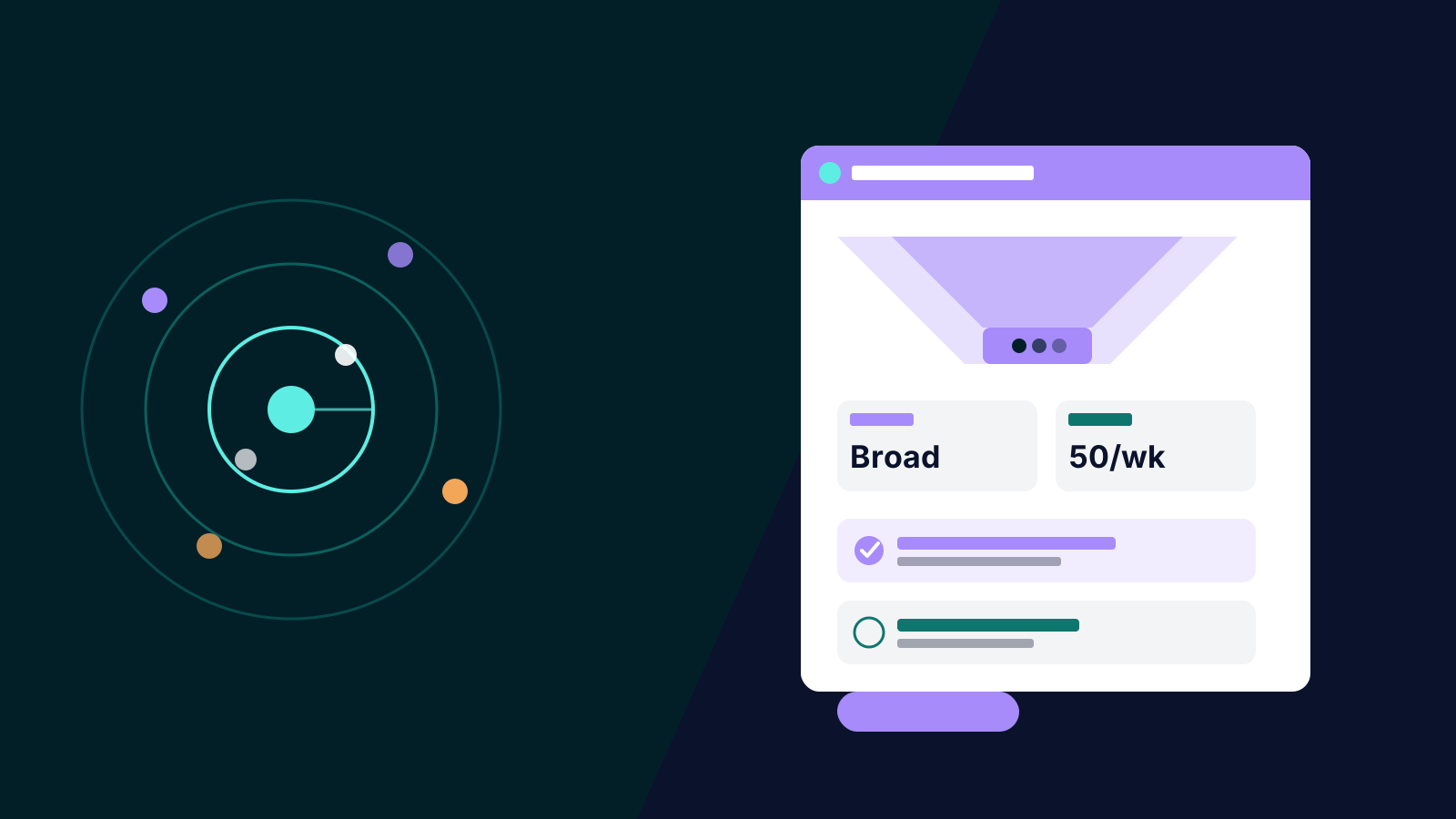
For a decade, skill in Meta advertising meant skill in audience construction: layered interest stacks, lookalike ladders, painstaking exclusion lists. That skillset is now mostly obsolete. Meta's delivery system selects audiences algorithmically from conversion signals, and the advertiser's targeting inputs have shifted from instructions to suggestions. Fighting this change costs money. So does surrendering to it blindly.
This article covers what actually determines who sees your ads in 2026, why broad delivery usually wins, and the specific situations where tighter control still pays.
What Changed
With Advantage+ audience, Meta's AI finds your audience from your conversion history, pixel and Conversions API signals, and creative content. Any demographics or interests you add act as suggestions the system prioritises before expanding beyond them, not as boundaries it respects. The old hard-constraint targeting still exists in places, but the direction of the platform is unambiguous: delivery decisions have moved from your settings to Meta's models.
The reason broad delivery tends to win is mechanical, not ideological. Detailed targeting restricts the auction pool, which raises CPMs and, more importantly, starves the delivery model of the freedom to find converters your interest logic would never have guessed. Interest categories are crude proxies built from page likes and behaviour; conversion signals are the real thing. When an account has enough of those signals, the model beats the proxy. Practitioner testing across accounts consistently finds the same pattern: broad setups with strong signal outperform interest stacks, with the advantage growing as conversion volume grows.
The Real Targeting Levers
Targeting has not disappeared. It has moved. Three inputs now do the work the audience builder used to do.
- Conversion signal quality. The delivery system optimises toward the events you send it, so complete, deduplicated, well-matched signals are the foundation of accurate delivery. This is why Conversions API implementation is a targeting project as much as a measurement one, and why accounts with weak signal see broad delivery wander.
- The optimisation event itself. Optimise for purchases and Meta finds purchasers; optimise for leads and it finds form-fillers, including the low-quality kind. Choosing an event deeper in the funnel, and feeding qualified outcomes back where volume allows, steers delivery more powerfully than any audience setting ever did.
- Creative. Delivery models read creative content and match it to responsive users, which means your ad is your audience. A video speaking directly to finance leads finds finance leads. This is also why a systematic creative testing programme now doubles as audience exploration: each new concept probes a different pocket of the auction.
When Narrow Still Wins
Broad-first is the right default, not a universal law. Constraints earn their keep in a few situations.
Low signal volume is the big one. The delivery model needs conversions to learn from; below roughly 50 conversion events a week on the optimisation event, its guesses get erratic, and audience suggestions or lookalikes built from customer lists give it useful starting structure. Genuinely niche B2B is a related case: when your true market is a few thousand buying units, broad prospecting burns budget proving what you already know, and it is often better to run tight custom-audience and retargeting layers on Meta while LinkedIn carries the precision work.
Regulatory and brand constraints also justify control: age-gated products, geographic licensing, and categories where Meta restricts targeting options anyway. And every account, broad or not, should keep genuine exclusions in order: existing customers out of acquisition campaigns and out of the value loop where appropriate, current subscribers away from introductory offers.
What almost never earns its keep any more is the middle ground: modest interest stacks, three-layered behaviours, one-percent lookalikes on large accounts. They add restriction without adding information the model lacks.
A Sensible Structure for 2026
For most accounts the resulting shape is simple: one consolidated broad prospecting campaign per objective, carrying several creative concepts, optimised to the deepest event with adequate volume; a modest retargeting and customer layer with genuinely different messaging; and testing infrastructure that cycles new creative through cleanly. Consolidation matters because splitting spend across many small ad sets fragments learning that would otherwise compound, the same logic that applies to Advantage+ shopping versus standard structures.
Judge the structure on blended cost per acquisition and, where you can, incrementality, not on the reported performance of individual ad sets, which delivery algorithms flatter in ways that do not survive holdout testing.
The uncomfortable summary is that targeting skill has become signal and creative skill. The accounts winning on Meta in 2026 are not the ones with the cleverest audience definitions; they are the ones sending the richest conversion data and testing creative fastest. If you want an audit of whether your account structure and signals are set up for how delivery actually works now, our paid social team can help. Get in touch.