
Lead Forms vs Landing Pages on Meta and LinkedIn: The Quality Trade-Off
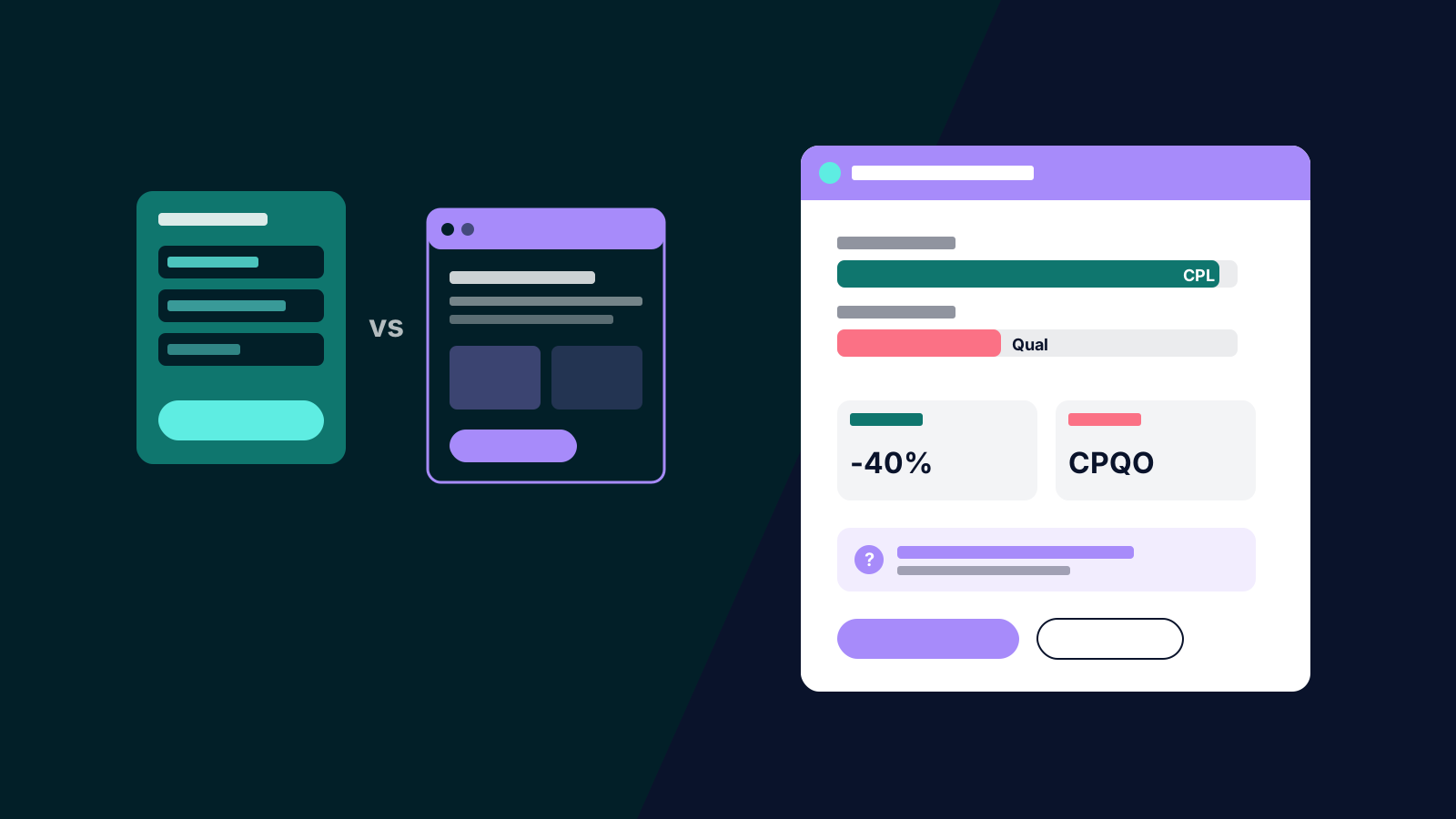
Every B2B and lead-gen advertiser on Meta or LinkedIn faces the same fork: send the click to your website, or capture the lead inside the platform with a native form. The platforms push the native option hard, and the headline numbers explain why: cost per lead routinely drops by a third to a half when the form comes to the user instead of the user coming to the form. Then sales works the leads, and a different number appears: connect rates fall, qualification rates fall, and someone declares native forms a scam.
Neither reading is right. The trade is real, it is manageable, and the correct choice differs by campaign objective. This article covers the mechanics on both platforms, the levers that recover quality, and a decision framework.
Why Native Forms Convert More and Qualify Less
Meta's instant forms and LinkedIn's Lead Gen Forms share a design: the ad opens an in-platform form pre-filled from the user's profile, submission is one or two taps, and the user never leaves the feed. Every source of friction disappears, including load time, navigation, and typing.
But friction was doing a job. A landing page visit is a small commitment test: the user chose to leave the feed, absorbed your pitch, and typed their details. Pre-filled two-tap forms admit everyone, including people half-registering an interest they will not remember on Thursday when sales calls. Pre-fill also inserts personal emails where you wanted work emails, and the absence of a page means the lead arrives knowing less, so more of qualification lands on your team. None of this is hidden; it is the direct consequence of removing the commitment gate, and pretending the CPL drop is free is how pipelines fill with noise.
There is also a plumbing tax: native leads sit in the platform unless you connect CRM integration or sync tooling, and lead value decays by the hour. Same-hour follow-up versus next-day follow-up often swings contact rates more than form choice does.
Recovering Quality Inside Native Forms
The gap narrows substantially with deliberate design, because both platforms give you friction controls if you choose to use them.
- Add intentional friction back. Meta explicitly offers a higher intent form type with a review step, and both platforms support custom questions. One or two short-answer or choice questions ("what is your timeframe", "how many staff") filters the drive-by submissions and arms sales.
- Force the fields that matter. Requiring work email on LinkedIn, or asking for it explicitly instead of accepting the pre-filled personal address, trades volume for usable contacts. LinkedIn's own guidance is three to four fields for conversion; go a field or two beyond it when quality is the constraint.
- Qualify with the creative. The ad copy does the landing page's filtering job: name the audience, the offer and the ask plainly, so the wrong people never open the form. Vague curiosity hooks produce vague curiosity leads.
- Wire the follow-up before launch. CRM sync, instant notification, and a same-day contact SLA. Then close the loop by feeding lead outcomes back to the platform through Conversions API or offline uploads, so delivery optimises toward qualified leads rather than form fills, which is the single highest-leverage fix on this list.
Landing pages have their own optimisation discipline, which we covered in form optimisation for lead generation and landing page optimisation; a weak page loses to a well-built native form on both cost and quality.
A Decision Framework
Choose native forms when the offer is simple and the commitment is low (newsletter, gated content, event registration, quote requests in familiar categories), when mobile share is high, when your landing page is weak or slow, and in ABM and retargeting layers where the audience already knows you and friction is pure loss. Choose landing pages when the product needs explanation or configuration, when the sale is high-value and consultative and one bad-fit meeting costs more than ten cheap leads save, when compliance or consent requirements need controlled presentation, and when the page's persuasion measurably lifts downstream close rates.
Then stop guessing and measure the only number that settles it: cost per qualified opportunity, not cost per lead. Run both routes against the same audience for a month, tag the source, and let CRM outcomes decide. In our experience the split verdict is common: native forms win the top of the funnel and retargeting layers, pages win the consideration and high-ticket layers, and the accounts that struggle are the ones running one answer everywhere.
If your lead flow needs this sorted, from form architecture to the CRM feedback loop that makes platforms optimise for quality, our paid social team builds it end to end. Get in touch.