
Account-Based Marketing on LinkedIn: Beyond Basic Retargeting
Most B2B advertising optimises for the wrong unit. Campaigns chase leads, but businesses close accounts, and the two are not the same thing: a thousand leads from companies that will never buy is worse than fifty engaged people inside the twenty companies that might. Account-based marketing starts from that observation and works backwards, and LinkedIn is the only major ad platform where the targeting primitives genuinely support it.
Yet most "ABM" on LinkedIn amounts to a retargeting layer with a new name. This article covers what the real version looks like: list construction, audience architecture, creative by stage, and the measurement change that makes or breaks the programme.
The Foundation: Company List Targeting
LinkedIn's Matched Audiences let you upload a list of target companies and match it against LinkedIn's company pages, then advertise to employees of exactly those organisations. The mechanics matter: lists match on company name and URL, so clean formatting improves match rates, matching takes a day or two, and your matched audience must clear minimum size thresholds before it serves, with LinkedIn's own guidance suggesting at least several hundred matched members and recommending list sizes of a thousand-plus companies for stable delivery.
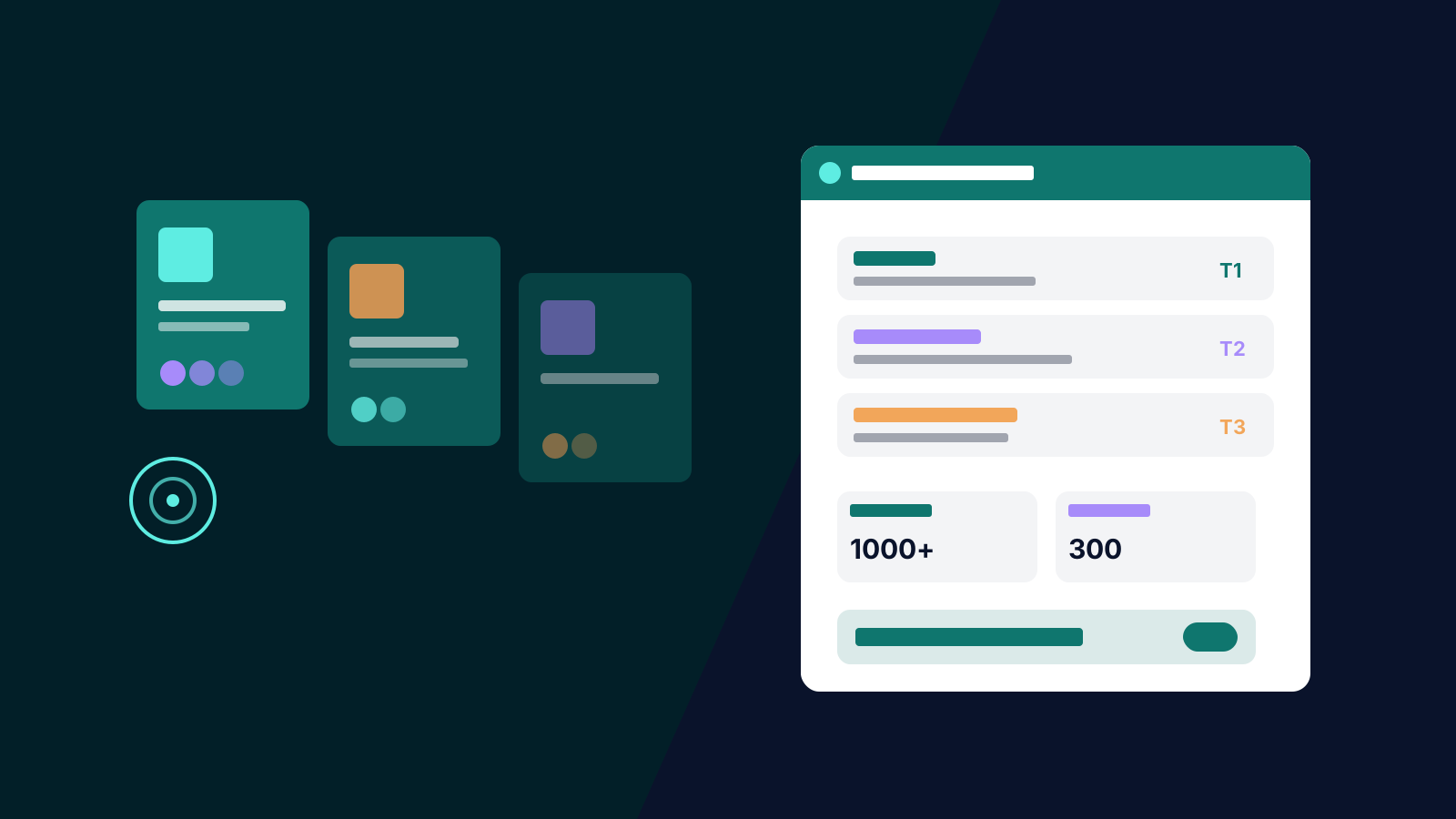
That last constraint shapes strategy. A fifty-account "strategic ABM" list cannot run as its own campaign on LinkedIn; it needs to be pooled into a tier. Which is the right mental model anyway: tier your market. Tier one, the named accounts sales actively works, pooled for advertising and handled individually by sellers. Tier two, the few hundred to few thousand accounts matching your ideal customer profile. Tier three, everything else, which is where conventional demand generation targeting takes over. Budget and message intensity descend through the tiers.
The list itself is the strategy. Build it from your best-customer analysis (industry, size, tech stack, buying signals), not from a bought database dump, and refresh it quarterly with sales. An ABM programme aimed at the wrong accounts executes perfectly toward nothing.
Layering: From Companies to Buying Committees
A company list alone targets everyone from interns to the CEO, so the second layer is who within the account: job function, seniority and title filters intersected with the list. B2B purchases are committee decisions, and the practical approach is two or three role-based audience slices per tier (economic buyers, technical evaluators, end users) because they need different messages. Keep each slice above the size floor; when the intersection gets too small, widen the role definition rather than shrinking the account list.
Two exclusions keep spend honest: existing customers (unless expansion is the explicit goal) and your own employees, who otherwise absorb a surprising share of impressions.
Creative by Stage, Not by Format
ABM's advantage is knowing who you are talking to, which is wasted if every account sees the same lead-gen ad. Sequence the message to the account's relationship with you. Cold tier-two accounts get problem-led, credibility-building content: insight, benchmarks, the strongest thinking you have, with no form in sight. Engaged accounts (site visits, ad engagement, content downloads) graduate to solution framing, cases and comparison content. Sales-active tier-one accounts get air cover: proof points, customer stories, and executive-voice content, where thought leader ads from real profiles reliably outperform company-page equivalents. The retargeting most advertisers call ABM is just this last stage, missing the two stages that fill it.
Measure Coverage, Not Leads
Here is where programmes live or die. Judged on cost per lead, ABM always loses to broad lead-gen, because precision costs more per click. The correct scorecard is account-level: coverage (what share of target accounts are we reaching), engagement (which accounts are consuming content, measured in LinkedIn's company engagement reporting and your own analytics), velocity (do engaged target accounts open opportunities faster than unengaged ones), and ultimately pipeline and revenue from the named list against a comparable pre-programme baseline. This requires joining ad data to CRM data at the account level, which is unglamorous plumbing of the kind we build in measurement engagements, and it is the single most common gap we find in stalled ABM programmes: the targeting was fine, but nobody could see it working, so it got cut.
Run the programme as a quarterly loop with sales: refresh the list, review account engagement together, retire messages that have stopped moving accounts, and feed sales intelligence back into the tiers. ABM on LinkedIn is not a campaign type; it is an operating rhythm between marketing and sales that happens to buy media. If you want help building the tiers, the audiences or the account-level measurement, our paid social team does this end to end. Get in touch.