
Diagnosing Creative Fatigue: The Signals Before Performance Drops
Every winning ad is dying from the day it launches. Not because anything is wrong with it, but because its audience is finite and memory is real: each additional exposure to the same person yields a little less attention than the one before. Run any creative long enough and the economics quietly invert, with rising costs buying declining response.
The expensive version of this story is the common one: the account runs until results visibly break, someone scrambles for new creative, and two high-cost weeks pass before replacements are live and learning. The cheap version is diagnosis from leading indicators, with replacements ready before the break. This article is about running the cheap version.
What Fatigue Actually Is
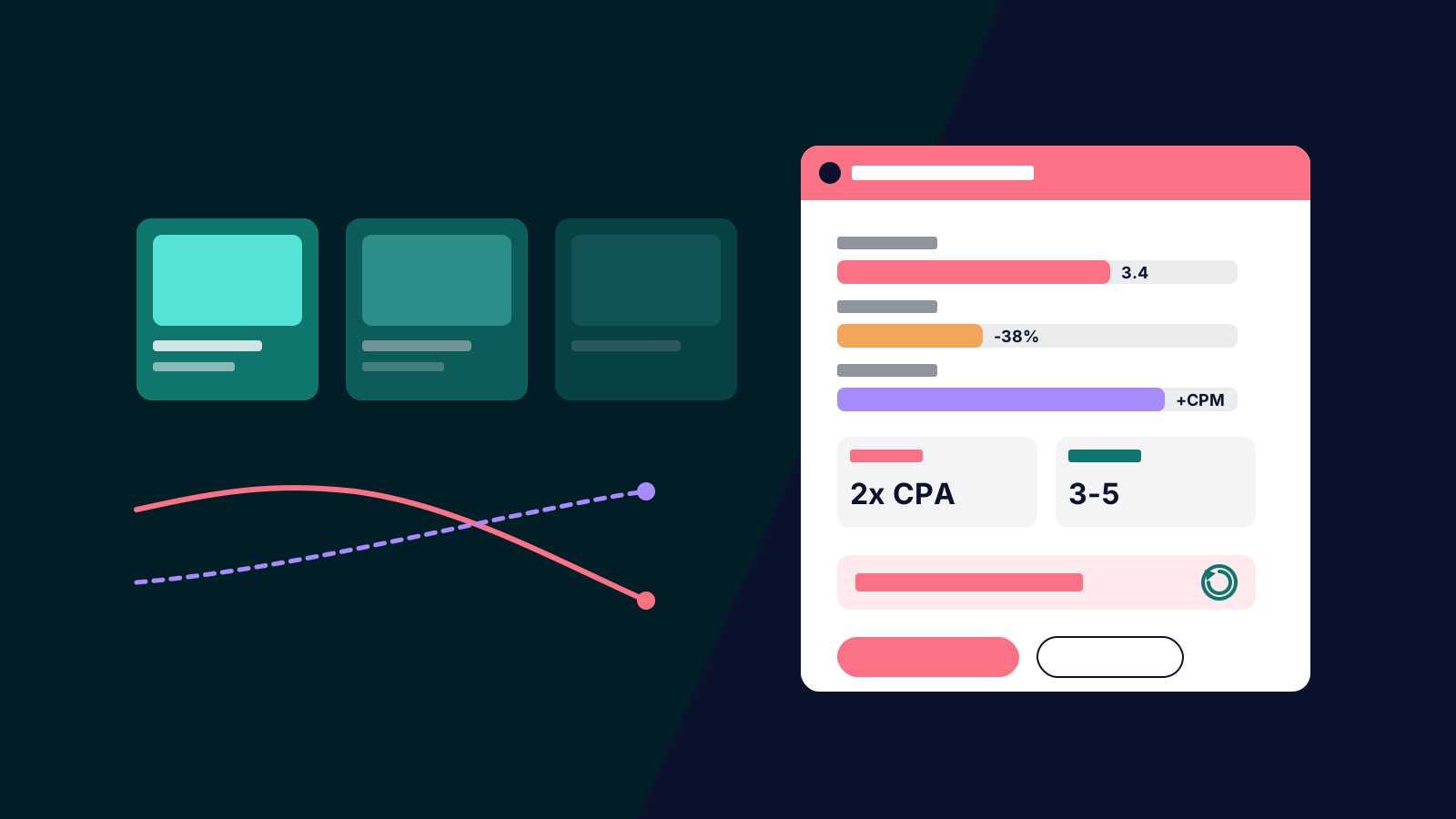
Fatigue is audience saturation meeting attention decay. The delivery system shows your ad to the people most likely to respond first; as those pools deplete, it reaches deeper into less responsive territory while simultaneously re-serving people who have already seen and ignored the ad. Both forces push cost per result upward. Meta now formalises the end state with an official creative fatigue status in Ads Manager, flagged when an ad's cost per result runs at roughly twice the level of its historical baseline. Useful to know, but it is a lagging label: by the time it appears you have already paid the fatigue tax for weeks.
The goal is to catch the curve earlier, and the leading indicators are consistent.
The Signals, In the Order They Appear
- Frequency climbing with flattening reach. The earliest structural warning. When frequency pushes past roughly 2.5 to 3 in a sustained way while reach growth stalls, the system has stopped finding new people, and practitioner threshold analyses consistently place the danger zone there for prospecting campaigns. Retargeting tolerates higher numbers by design.
- Hook and click-through decay. For video, three-second view rate sliding week over week is attention leaving; for all formats, declining CTR at stable CPM means the same people are scrolling past. Compare each ad against its own first fortnight, not against account averages.
- CPM creep on unchanged settings. As engagement falls, Meta's auction quietly charges more to force the same delivery.
- Cost per result rising last. By the time the verdict metric moves, the diagnosis is weeks old. Treat CPA movement as confirmation, never as the alarm.
A practical cadence: a weekly view per top ad of spend, frequency, hook rate, CTR, CPM and CPA against that ad's own baseline. Fifteen minutes, and fatigue stops being a surprise.
Diagnosis Before Treatment
Not everything that looks like fatigue is fatigue, and the treatments differ. Before refreshing creative, rule out the alternatives. A CPM spike hitting all ads at once is an auction event (seasonality, a competitor surge), not fatigue, and new creative will not fix it. A conversion-rate drop with healthy CTR points at the landing page or offer, not the ad. Tracking breakage looks like overnight collapse, not a slow slide; check events before touching creative. Genuine fatigue has a signature: gradual decay concentrated in specific long-running ads, frequency and CPM up, response metrics down, while newer ads in the same ad sets hold up.
Audience size sets the clock. A tight retargeting pool fatigues in days; broad prospecting over a large market can run the same concept for months. This is one more argument for the broad delivery structures we covered in Meta targeting in 2026: bigger pools mean slower saturation, all else equal.
Refresh Without Resetting
The blunt response to fatigue is replacement, but replacement has a cost: new ads re-enter learning, and killing a fatigued ad that still clears your efficiency floor can be worse than letting it coast while successors ramp. The better pattern is layered.
Refresh the surface first. Fatigue attaches primarily to the opening seconds and the visual, so new hooks, thumbnails and openings on a proven concept recover much of the lost attention at a fraction of production cost. Rotate genuinely different concepts second: a standing bench of three to five distinct angles spreads exposure so no single idea saturates, which is precisely what a running creative testing pipeline provides, and why testing and fatigue management are the same programme viewed from different ends. Formats with natural variety, notably UGC-style creative, fatigue more slowly because each execution reads as fresh content rather than a repeated ad.
And retire deliberately. When a fatigued ad's replacement is stable, pause the veteran rather than letting it drag averages. Record its lifetime stats in your testing register first; an ad that lasted five months tells you something about the concept worth reusing.
The discipline is unglamorous: watch leading indicators weekly, hold a bench of ready concepts, refresh hooks before concepts, and never let the first sign of fatigue be the CFO asking why acquisition costs rose. If you would rather have this run for you, monitoring and pipeline included, our paid social team does exactly that. Get in touch.