
Meta Advantage+ Shopping vs Standard Campaigns: When to Use Each
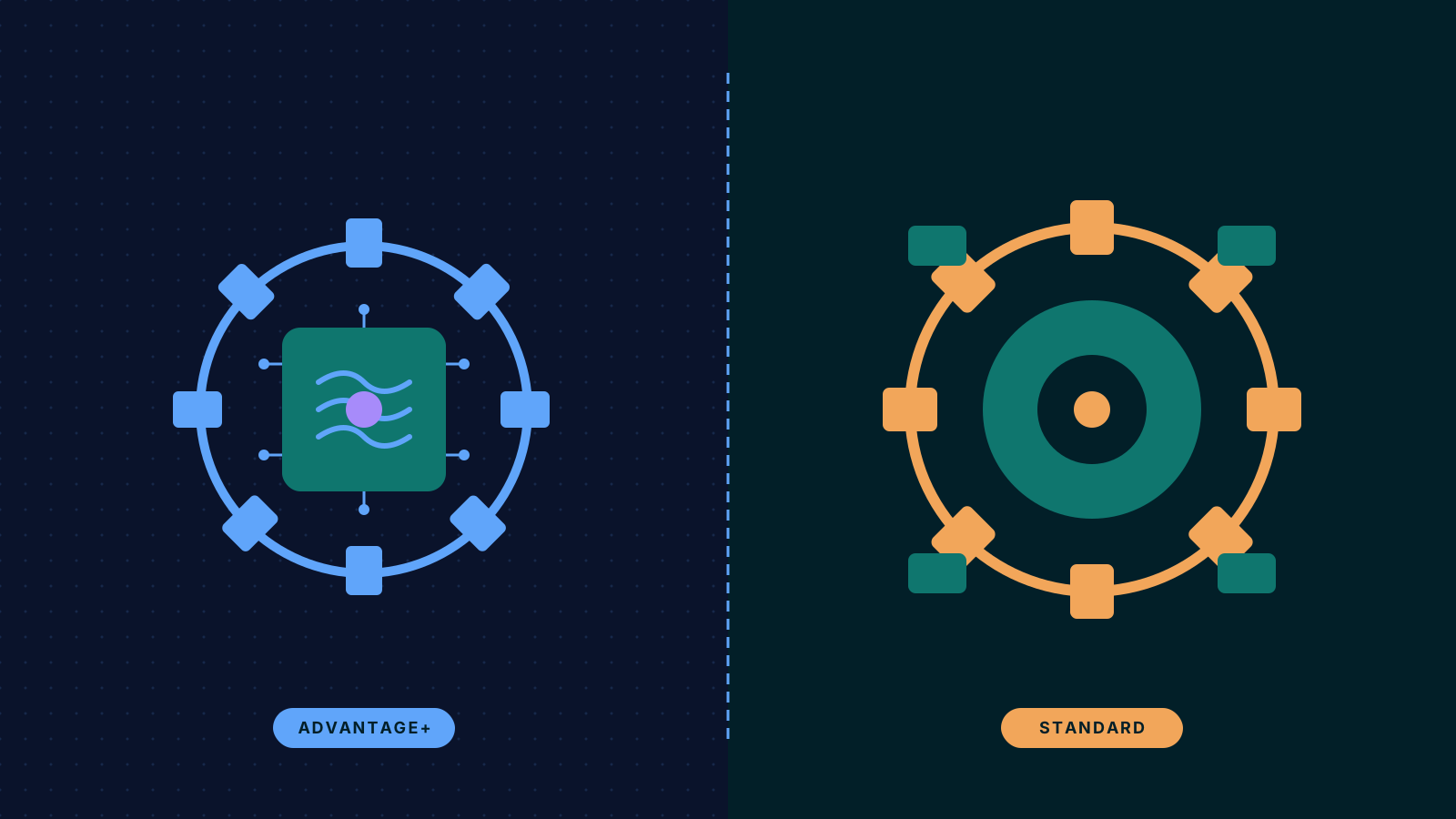
Meta's advertising platform has evolved significantly over the past few years, with Advantage+ Shopping campaigns representing a substantial shift toward automation and AI-driven optimisation. For digital marketers and ecommerce businesses, the choice between Advantage+ and standard campaigns is no longer straightforward. Both offer distinct advantages, and understanding when to deploy each approach is critical to maximising return on ad spend (ROAS) and managing costs effectively.
This article examines the practical differences between these two campaign types, the data supporting their respective performance outcomes, and a decision framework to help you choose the right approach for your circumstances.
Performance Data: The Numbers That Matter
The most compelling argument for Advantage+ comes from performance data. Across diverse ecommerce verticals, Advantage+ Shopping campaigns deliver approximately 32% higher ROAS compared to manually optimised standard campaigns. Simultaneously, cost per acquisition (CPA) falls by around 17% when using Advantage+.
These improvements are substantial. However, these figures come with important caveats. The data applies primarily to mature accounts with sufficient volume and historical data.
Advantage+ requires a minimum of 50 optimisation events per week to function effectively. Additionally, accounts spending less than £10,000 monthly struggle to unlock Advantage+'s full potential.
Key Advantages of Advantage+ Shopping
Advantage+ eliminates the need to define custom audiences manually. The system uses machine learning to identify which combinations of audience, placement, device, and creative best convert.
It tests all available placements simultaneously and allocates spend toward the best performers. It tests creative combinations dynamically, assembling thousands of possible combinations.
For larger budgets and established products, Advantage+ substantially reduces the time spent on weekly optimisation tasks.
Key Advantages of Standard Campaigns
Standard campaigns allow you to define exactly who sees your ads with granular audience control. This control is essential when targeting niche markets.
In standard campaigns, you control which creative variations compete against each other, enabling rigorous A/B testing.
You allocate budgets across ad sets explicitly and get more predictable cost structures.
Standard campaigns perform acceptably even with smaller budgets and lower conversion volumes.
When Advantage+ Excels
Deploy Advantage+ Shopping campaigns in these scenarios:
- High-Volume Ecommerce: You have thousands of SKUs, hundreds of daily transactions, and a mature pixel implementation.
- Established Brands with Strong Data: Your pixel fires accurately, you track conversions reliably, and you have 12+ months of historical data.
- Budget Scale: You spend at least £10,000 monthly, ideally substantially more.
- Conversion-Focused Objectives: Your primary goal is maximising purchases or high-value actions.
When Standard Campaigns Perform Better
Deploy standard campaigns in these scenarios:
- Niche or Specialist Markets: Your audience is defined by specific interests, professions, or demographics.
- Limited Budgets: You spend under £10,000 monthly.
- Creative Testing Priority: You need to understand which creative elements drive results.
- Constrained Pixel Data: Your pixel fires inconsistently or data quality is uncertain.
- Complex Product Ecosystems: You sell products with different audiences, margins, and marketing strategies.
- Brand Considerations: You have brand safety concerns or regulatory restrictions.
The Hybrid Approach: Combining Both
Many mature marketing teams deploy both campaign types simultaneously. Advantage+ campaigns handle high-volume products with strong pixel data. Standard campaigns target niche audiences, test new creative approaches, or manage products with lower transaction volumes.
This approach balances optimisation speed with control and insight.
A Decision Framework
Ask yourself these questions in order:
1. Do you have at least 50 conversion events per week? If no, use standard campaigns.
2. Do you spend at least £10,000 monthly on paid advertising? If no, use standard campaigns.
3. Is your primary objective conversion optimisation? If no, consider standard campaigns.
4. Is your audience broad and relatively defined by purchase behaviour? If niche, use standard campaigns.
5. Is creative testing a strategic priority? If yes, use standard campaigns.
6. Do you have reliable pixel data and a mature product catalogue? If no, use standard campaigns.
If your answers are mixed, the hybrid approach deserves consideration.
Implementation Considerations
If you currently run standard campaigns and want to test Advantage+, avoid stopping existing campaigns abruptly. Run parallel campaigns for 4-8 weeks.
Advantage+ performance depends entirely on data quality. Before deploying at scale, audit your Meta pixel implementation thoroughly.
Advantage+ works best when you provide substantial creative variation. Upload 15-20 images, 5-10 videos, and diverse headlines and descriptions.
---
The choice between Advantage+ Shopping and standard campaigns depends on your specific circumstances: budget scale, audience characteristics, conversion volume, and strategic priorities.
Neither approach is universally superior. Understanding your data, your audience, and your objectives allows you to deploy the right approach. For teams looking to build a full-funnel Meta ads strategy, understanding when to use each campaign type is a foundational decision.
Start with an honest assessment of where you stand relative to the framework outlined above. Your circumstances will guide you toward the optimal strategy.