
AI in Marketing Operations: Where to Start and What to Automate First
Most conversations about AI in marketing start in the wrong place. Someone senior asks for an "AI strategy", a working group forms, a vendor demo impresses everyone, and six months later the team is still assembling the Monday report by hand. The gap is not ambition. It is that strategy documents rarely name a specific task, a specific owner and a specific way of checking the output.
Our view, from building these systems for clients, is sceptical but positive. AI is genuinely useful in marketing operations today, but the value sits in unglamorous work: the repetitive, rules-heavy jobs where a mistake is easy to spot. This article is the hub for a short series on the topic. It covers where to start, how to choose what to automate first, and the foundations that decide whether any of it holds up.
Start With the Work, Not the Strategy
The best first candidates share three traits: they happen often, they follow rules a competent junior could write down, and their output can be checked quickly. In marketing operations, five areas fit that description reliably.
Reporting assembly is the obvious one. Pulling numbers from platforms, reconciling them and drafting the commentary is hours of weekly effort, and the draft is easy to verify against the source tables. QA of tracking and product feeds is another: checking event names against a specification, flagging missing parameters, or spotting disapproved and malformed products before they cost impressions. If you have read our notes on auditing a GA4 property or feed optimisation, you will recognise how checklist-shaped that work is.
Search term triage suits AI well too. Classifying thousands of queries into intent tiers and proposing negatives is pattern work, and a person can approve the list in minutes, continuing the discipline from our negatives piece. Creative variation (headline and description options within brand rules, resized copy for new placements) speeds up the testing cadence we describe in our creative testing framework. Finally, briefing drafts: turning a call transcript and last quarter's results into a first-draft brief saves the blank page, and the account lead still owns the thinking.
A Simple Lens for Prioritising
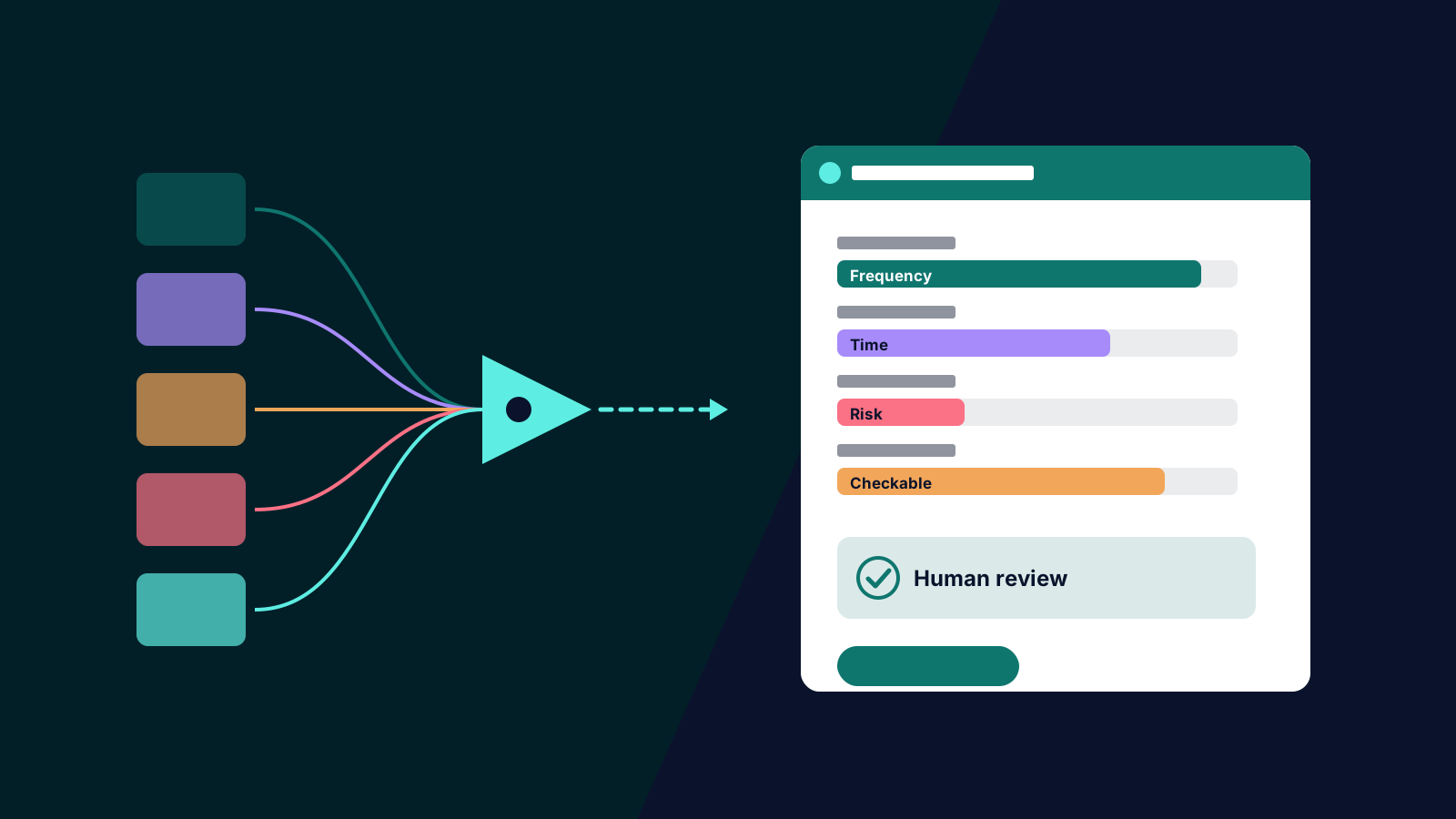
When a team has twenty ideas, we score each one on four factors. None needs precision; a rough one-to-five rating per factor is enough to rank the list.
- Frequency: how often the task happens. Daily and weekly work compounds; an annual task rarely repays the build.
- Time cost: hours per occurrence, including the waiting and chasing around it.
- Error cost: what a mistake would cost if it reached a client, a platform or a customer. High error cost does not rule a task out, but it decides how much review it needs.
- Verifiability: how quickly a person can confirm the output is right. This is the factor teams most often skip, and in our experience it matters most.
The tasks that rise to the top are frequent, slow, cheap to get slightly wrong and fast to check. Search term triage usually scores well. Automated budget reallocation usually does not, at least at first, because the error cost is high and checking it properly takes nearly as long as doing it.
Keep a Human Where Errors Are Costly
Verifiability leads directly to review design. For low-stakes drafts, a spot check is fine. Where the output touches spend, claims made in ads, or anything a customer sees, a named person approves it before it goes live, and the approval is logged. Australia's Guidance for AI Adoption from the National AI Centre makes the same point at an organisational level: "maintain human control" is one of its six essential practices. We treat it as a design requirement rather than a compliance box. A system nobody reviews is a system nobody trusts, and an untrusted system is quietly abandoned.
Data Foundations Decide the Ceiling
AI does not fix messy data; it produces confident summaries of it. If conversion definitions differ between GA4 and the CRM, an automated report will narrate the contradiction fluently. The groundwork is the same groundwork good analytics always needed: a written measurement plan so definitions are fixed, and clean, connected data in one place, which for many clients starts with the GA4 BigQuery export. Teams that skip this step usually discover it in month two, when the outputs cannot be reconciled with anything.
Governance and Privacy From Day One
Two habits prevent most problems. First, keep an inventory of where AI touches personal information, and follow the OAIC's guidance on commercially available AI products, which recommends against entering personal information, particularly sensitive information, into publicly available generative AI tools. Second, watch the legal calendar. From 10 December 2026, privacy policies must describe automated decisions that could significantly affect people. Most marketing operations work will not meet that threshold, but automated lead scoring or eligibility screening might, as we covered in the Privacy Act reforms.
Later articles in this series go deeper on governance, creative production, data readiness and reporting, each with the practical detail this overview leaves out.
The fastest route to useful AI in marketing operations is one well-chosen task, done properly, with review built in, then the next one. If you want help choosing and building those first workflows, see our AI marketing operations work or start with an AI Readiness Sprint. Get in touch.