
Moving from ROAS to Profit: Value-Based Bidding in Google Ads
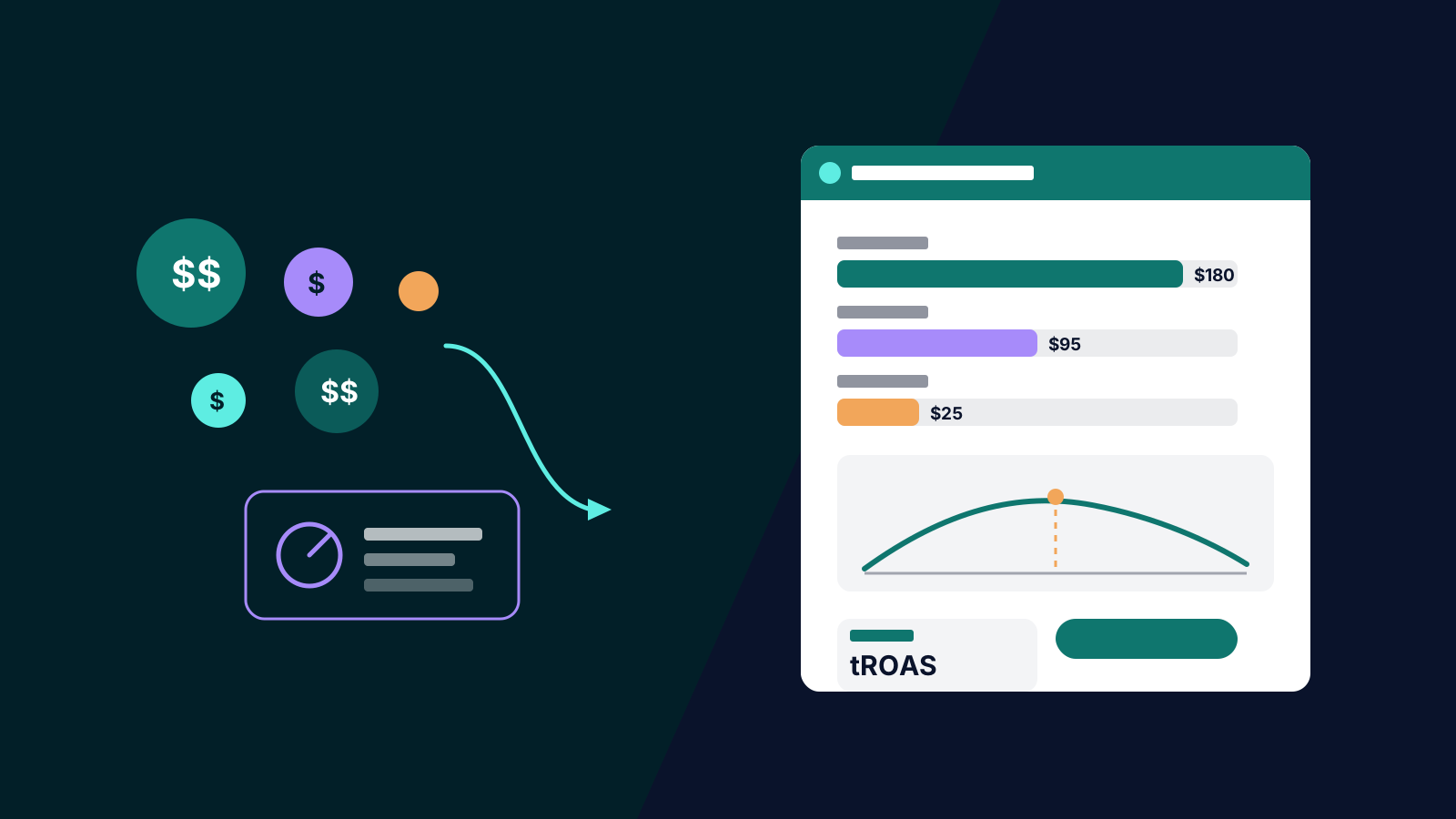
Smart Bidding optimises exactly what you tell it to optimise. Most accounts tell it that every conversion is worth the same. A $2,000 customer and a $40 customer, a qualified enquiry and a tyre-kicker, a full-margin sale and a discounted clearance order: identical, as far as the algorithm knows. Then the account is judged on profit, a number the algorithm has never seen.
Value-based bidding closes that gap. It is the difference between asking Google for as many conversions as possible and asking it for as much value as possible, and for most established accounts it is the largest remaining bidding upgrade available. It is also widely misunderstood, so this article covers what it requires, how to roll it out without destabilising performance, and the traps.
What Value-Based Bidding Actually Is
Value-based bidding covers the two Smart Bidding strategies that optimise conversion value rather than conversion count: Maximise conversion value, and its constrained form, target ROAS. Under these strategies, Google's auction-time models estimate not just the probability that a click converts but the likely value if it does, and bid accordingly. A query pattern that historically produces large orders earns higher bids than one producing small orders, even at identical conversion rates.
The mechanics are only as good as the values you feed them. That is the real project. The bid strategy is a dropdown; the value architecture behind it is where the work and the advantage live.
Getting the Values Right
There are three maturity levels, and each one improves on the last.
- Revenue-based values. Ecommerce accounts pass order revenue automatically. This already separates big baskets from small ones, but it optimises for revenue, and revenue is not profit. Two $200 orders with 60 and 15 per cent margins look identical.
- Margin-adjusted values. Pass profit rather than revenue, either by uploading margin-adjusted conversion values or by applying conversion value rules to scale categories up or down. The algorithm now steers toward what you actually keep. Google's own guidance on value-based bidding is explicit that the values should represent what matters to the business, not just topline sales.
- Downstream values for lead generation. Lead-gen accounts have the most to gain, because raw enquiries vary enormously in quality. Assign values by stage (enquiry, qualified lead, opportunity, closed deal) and import those outcomes back into Google Ads via offline conversion imports. Even rough stage values transform the optimisation: a bidding system that learns which queries produce closed deals stops buying cheap enquiries that never advance. If you can estimate customer lifetime value by segment, better still; that analysis is a service line of ours in its own right at /solutions/ltv-analysis.
Values do not need to be perfect. They need to be directionally honest and consistently applied. A rule of thumb: if two conversions differ in real worth by more than about 30 per cent, the difference is worth encoding.
Rolling It Out Without Breaking Things
Value-based bidding has data requirements: Google recommends at least 15 conversions in 30 days for target ROAS at the relevant level, and practically you want comfortably more before the value predictions stabilise. The migration sequence that avoids most pain:
- Fix the measurement first. Value-based bidding amplifies whatever your conversion tracking says, so double-counted purchases or missing offline imports become bidding errors, not just reporting errors.
- Run Maximise conversion value without a ROAS target for two to four weeks. This lets the system learn value patterns before you constrain it.
- Set the initial target at your trailing actual ROAS, not your aspiration. Setting a target far above recent reality forces the system to abandon volume hunting for a number it cannot hit, and spend collapses.
- Move the target gradually, five to ten per cent at a time, no more than fortnightly, and judge each change over full weeks to respect conversion lag.
Expect a learning period wobble. The accounts that fail at value bidding are usually the ones that panicked in week two and reverted, resetting the learning they had paid for.
The Traps
Three failure modes account for most disappointments. First, optimising to revenue when margins vary widely, which quietly shifts spend toward low-margin lines; margin adjustment fixes it. Second, blended targets across products with structurally different economics; separate campaigns, or at minimum conversion value rules, keep a 10x ROAS product from starving a 4x product that generates more absolute profit. Third, forgetting that ROAS is a ratio, not a goal. Maximum profit almost never sits at maximum ROAS, because the last increments of efficient spend still return more than they cost. Raising a ROAS target always trades volume for efficiency, and the right trade depends on your margin structure, a calculation worth doing on paper before touching the dropdown.
And keep perspective on what the numbers mean: in-platform ROAS still measures attributed value, not incremental value. Brand-heavy accounts inflate it. The methods in our guide to measuring what Google Ads actually drives apply just as much after the migration as before.
Value-based bidding is less a bidding change than a data engineering project with a bidding change at the end. Done properly, it points Google's considerable machinery at the number you actually care about. If you want help designing the value architecture or managing the migration, our paid search team runs these projects regularly. Get in touch.