
Server-Side Tracking ROI: How to Build the Business Case
Server-side tracking requires investment in infrastructure, implementation, and ongoing maintenance. For businesses evaluating whether to make the move, the question is not whether server-side tracking is technically better than client-side. It clearly is. The question is whether the business benefits justify the costs for your specific situation.
Building a credible business case requires quantifying three categories of value: data recovery, media efficiency improvement, and operational benefits. Here is how to estimate each.
Quantifying Data Recovery
The most straightforward benefit of server-side tracking is recovering conversion data that client-side tracking misses. To estimate this, you need to understand your current data gap.
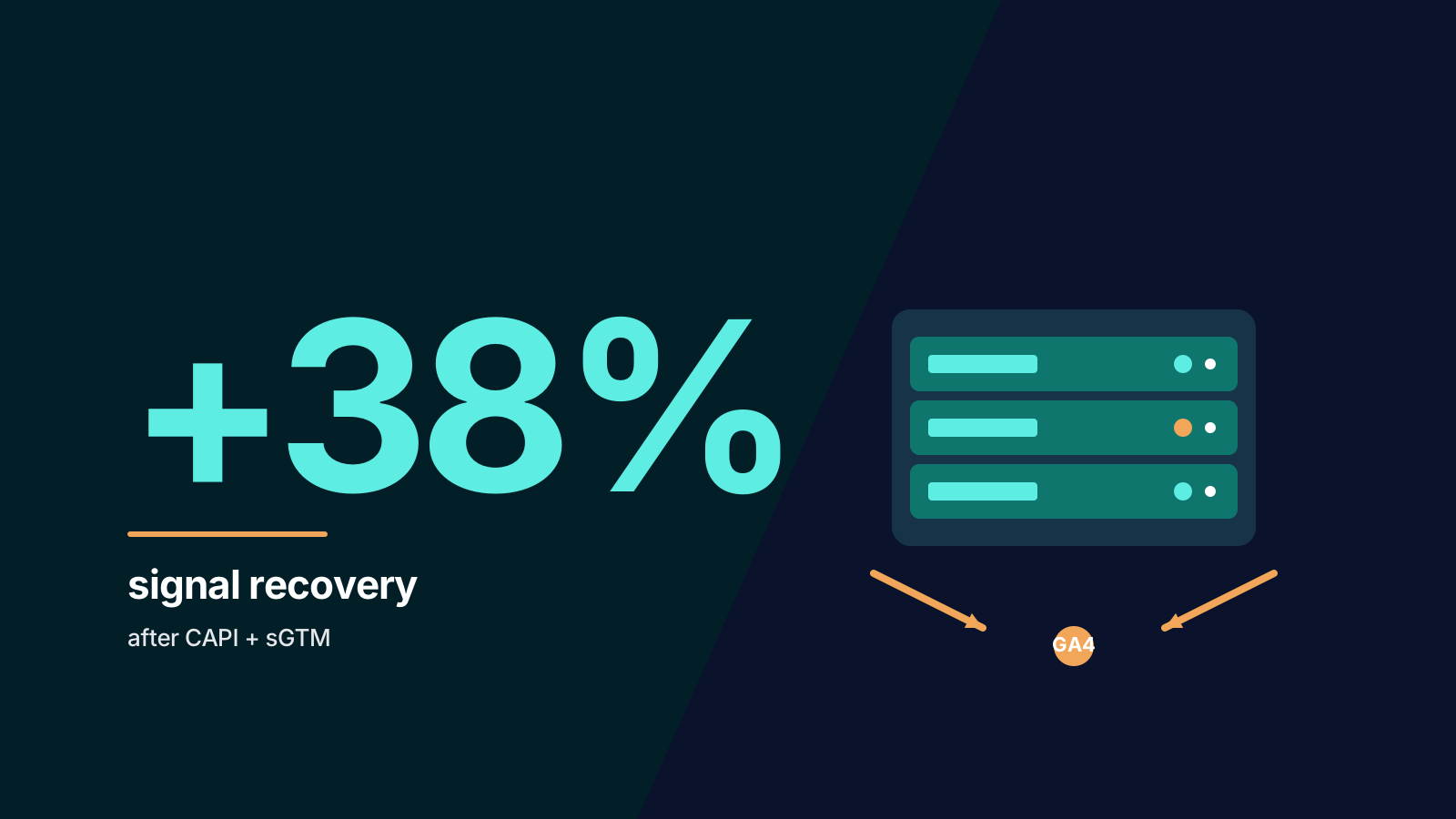
Compare your analytics-reported conversions against your actual business outcomes. If GA4 reports one hundred purchases but your order management system recorded one hundred and thirty, you have a thirty percent data gap. Not all of this gap will be recovered by server-side tracking, some may be due to other factors, but fifteen to twenty-five percentage points of recovery is typical.
The value of recovered data is not just better reporting. Each recovered conversion is a signal that feeds back into advertising platform algorithms. To quantify this, estimate the value of improved algorithmic optimisation, which typically manifests as a five to fifteen percent reduction in cost per acquisition.
A measurement approach that compares pre and post implementation performance provides the cleanest quantification once the system is live.
Estimating Media Efficiency Gains
Better conversion data means better algorithmic bidding, which means lower cost per acquisition or higher ROAS at the same spend level. This is the highest-value benefit for businesses with significant advertising spend.
Estimate the improvement conservatively. If your monthly paid media spend is one hundred thousand dollars and improved signal quality reduces CPA by ten percent, that is ten thousand dollars per month in efficiency gains, either as cost savings or as additional conversions at the same budget.
For businesses running on target ROAS bidding, the improvement manifests as higher revenue at the same spend level. A two percent improvement in ROAS on five hundred thousand dollars of monthly spend translates to ten thousand dollars in additional monthly revenue.
The media efficiency gain scales with spend. For businesses spending less than twenty thousand dollars per month, the absolute dollar value of improvement may not justify the implementation cost. For businesses spending over fifty thousand, the payback period is typically under six months.
Operational and Compliance Benefits
Server-side tracking provides operational benefits that are harder to quantify but genuinely valuable.
Data control means you decide exactly what data is shared with each platform. This simplifies privacy compliance because you can implement data minimisation at the server level rather than relying on platform-side controls.
Reduced page weight from removing client-side tags improves page speed, which benefits both SEO and conversion rates. If a digital marketing audit has identified page speed as an issue, server-side tracking is part of the solution.
Future-proofing against further browser restrictions provides long-term value. As browsers continue tightening privacy controls, the gap between client-side and server-side data collection will widen. Implementing server-side tracking now positions you ahead of further restrictions.
Building the Business Case
A credible business case for server-side tracking includes implementation costs on one side and expected benefits on the other.
Implementation costs include cloud infrastructure, typically five hundred to two thousand dollars per month for the server container depending on traffic volume, plus the one-time implementation cost which varies based on complexity.
Ongoing costs include monitoring, maintenance, and occasional updates as platforms change their requirements.
Expected benefits include data recovery value, media efficiency gains, and operational improvements. For a business spending one hundred thousand dollars per month on paid media, a conservative estimate of ten percent efficiency improvement yields one hundred and twenty thousand dollars per year in additional value against infrastructure costs of around twenty thousand per year.
The business case strengthens as advertising spend increases and as browser restrictions tighten further. For most businesses with meaningful paid media investment, the question is not whether to implement server-side tracking but when.