
CRO for B2B: Why Consumer Playbooks Don't Translate
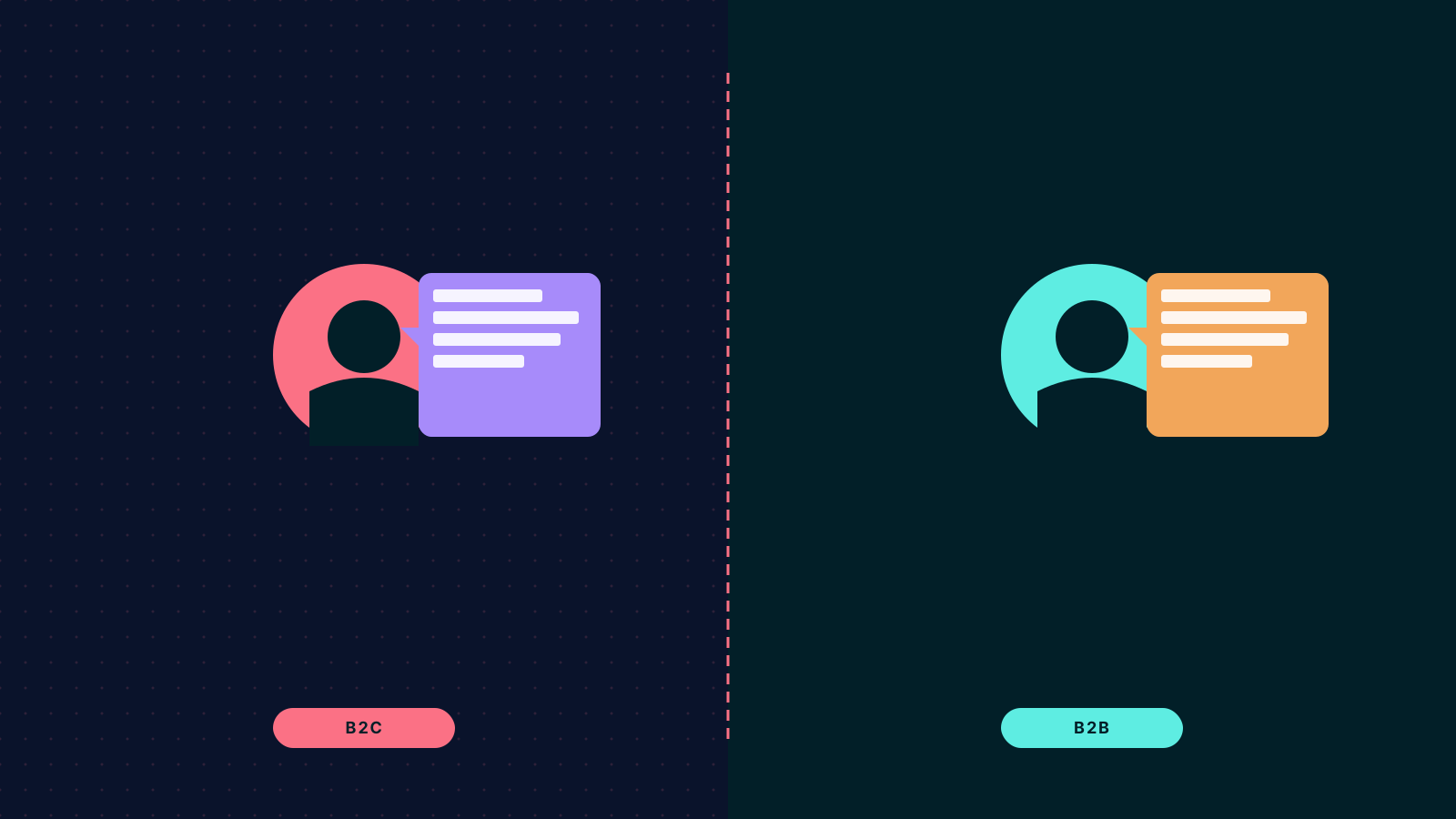
Most conversion rate optimisation advice is written for consumer businesses. Reduce friction. Simplify the checkout. Add urgency. These principles work when the conversion is a purchase that happens in a single session with a single decision-maker.
B2B is different. The conversion event, typically a demo request, consultation booking, or content download, is the beginning of a sales process rather than the end of a buying decision. The person filling out the form is often not the person who will make the purchasing decision.
These differences mean that CRO for B2B requires a fundamentally different approach, one that optimises for pipeline quality rather than conversion volume.
The Multi-Stakeholder Problem
In B2C, the person browsing your site and the person making the purchase decision are the same individual. In B2B, the person visiting your website might be a researcher, an end user, a technical evaluator, or a budget holder. Each has different motivations, different objections, and different information needs.
A landing page optimised for maximum form submissions will attract all of these personas equally. But only some of them represent genuine buying intent.
Effective B2B CRO segments conversion paths by intent signal. High-intent actions like demo requests and pricing inquiries should have streamlined paths with minimal friction. Lower-intent actions like content downloads should collect enough qualifying information to route leads appropriately.
This means that the B2C goal of reducing form fields to the absolute minimum does not always apply. A B2B form that includes company size and role helps the sales team prioritise and personalise their outreach.
Longer Consideration Cycles Change Everything
B2C CRO often focuses on single-session conversions. In B2B, the average buying cycle involves multiple visits over weeks or months, with multiple content touchpoints along the way.
This means the first visit rarely results in a conversion. B2B CRO should focus on progressive engagement: moving visitors from awareness to consideration to evaluation to conversion over multiple sessions.
Content plays a different role in B2B CRO. Blog posts, guides, case studies, and webinars build the trust and understanding that eventually leads to a demo request. Demand generation content and conversion optimisation are not separate functions in B2B.
Measuring CRO success in B2B requires a longer time horizon. Evaluate B2B CRO changes over quarterly cycles, not weekly ones.
Micro-Conversions as Leading Indicators
Because the primary conversion event in B2B happens infrequently and with a long lag, optimising directly toward it is difficult. You simply do not have enough conversion volume to run statistically significant tests in a reasonable timeframe.
Micro-conversions provide a solution. These are smaller, more frequent actions that correlate with eventual conversion: time on page, scroll depth, content downloads, return visits, and engagement with specific page elements.
Build a micro-conversion framework that maps engagement actions to eventual pipeline outcomes. Track which content types, page interactions, and site behaviours predict downstream conversion.
Lifecycle marketing bridges the gap between micro-conversions and revenue. Email nurture sequences, retargeting, and personalised content paths keep engaged prospects moving toward a buying decision.
What B2B CRO Testing Looks Like
Traditional A/B testing is harder in B2B because of lower traffic volumes and longer conversion cycles. But testing is still essential. The approach just needs to be adapted.
Test at the messaging level rather than the element level. Instead of testing button colours or headline fonts, test different value propositions, positioning angles, and proof points.
Use qualitative research to complement quantitative testing. Sales call recordings, customer interviews, and user testing sessions reveal objections and motivations that analytics data cannot.
B2B CRO is a different discipline from its B2C counterpart. A CRO programme that acknowledges these differences will outperform one that applies consumer tactics to a business buying process.