
CRO Beyond the Landing Page: Optimising the Full Conversion Path
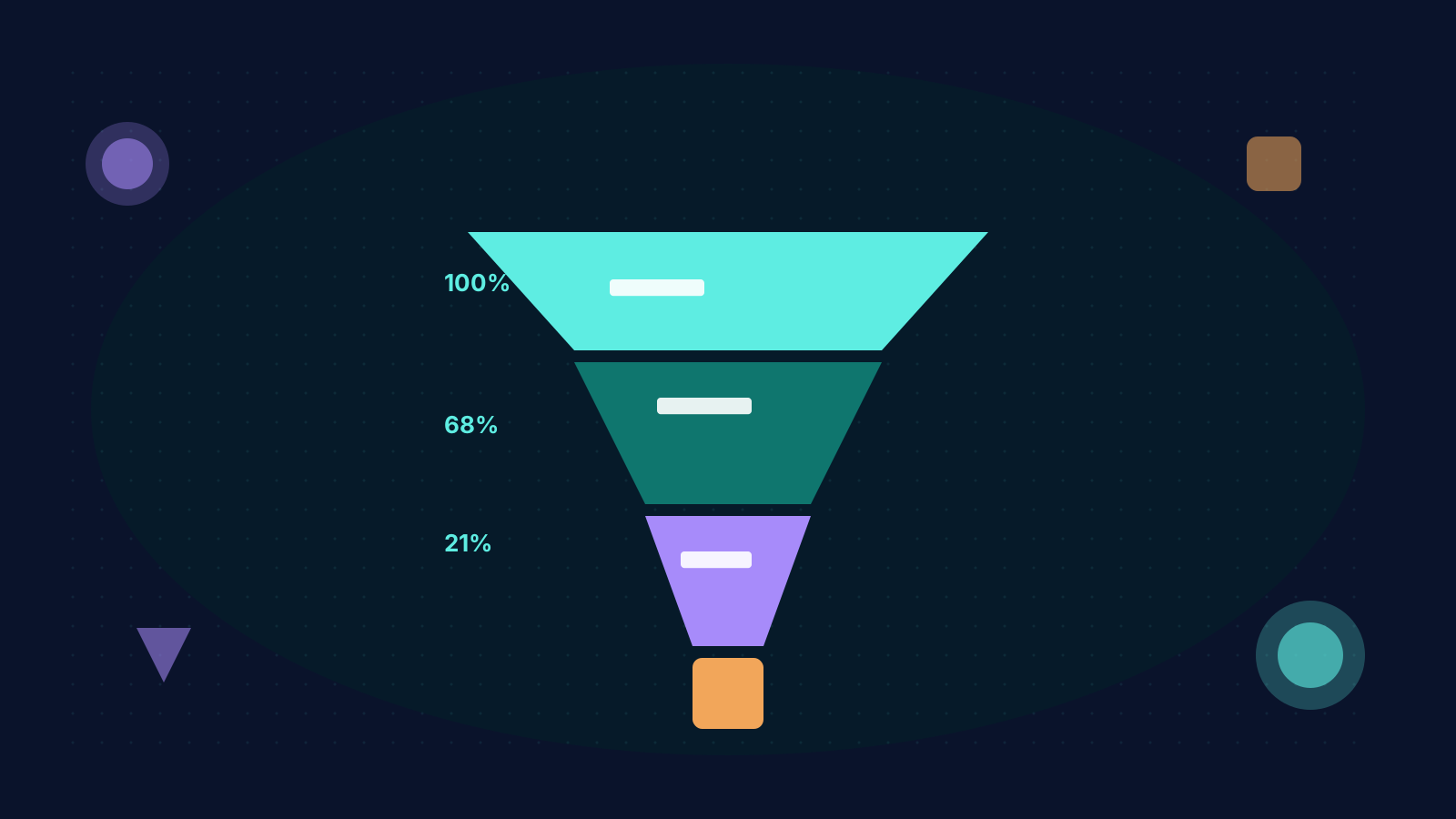
When most teams think about conversion rate optimisation, they think about landing pages. The headline, the hero image, the call-to-action button. These elements matter, but they represent a fraction of the total conversion path a visitor must navigate before becoming a customer.
The full conversion path includes everything from the initial click through to the thank-you page or order confirmation. It spans form fields, checkout steps, trust signals, loading states, error handling, and confirmation flows. Each of these stages is a potential exit point, and in most cases, the biggest drop-offs happen after the landing page, not on it.
Optimising the full path is where the most significant and durable conversion gains live.
Where the Real Drop-Offs Happen
Landing page optimisation gets attention because it is visible and straightforward to test. But the data consistently tells a different story about where visitors abandon. For ecommerce businesses, the biggest single drop-off point is typically the cart-to-checkout transition. For lead generation, it is partway through a multi-step form.
These mid-funnel drop-offs are harder to see because they require deeper analytics setup. Standard reporting often shows landing page bounce rate and final conversion rate, but the steps in between are invisible unless you have deliberately instrumented them.
Setting up GA4 funnel exploration reports that track each micro-step in the conversion path reveals where visitors are actually leaving. This is the starting point for any CRO programme that extends beyond landing page tests.
Form Optimisation: The Highest-Leverage Mid-Funnel Fix
Forms are conversion bottlenecks in almost every business. Whether it is a contact form, a registration flow, or a checkout process, the form is where you ask visitors to shift from browsing to committing. The friction in that transition determines whether they follow through.
The most common form problems are not about design. They are about unnecessary fields, confusing labels, unclear error messages, and the absence of progress indicators. Removing a single unnecessary field can materially improve completion rates, not because the field takes time to fill in, but because each additional field increases the perceived effort of the task.
Error handling deserves particular attention. Inline validation that shows errors as the visitor types, rather than after submission, reduces frustration and abandonment. Specific error messages that explain what went wrong and how to fix it outperform generic messages like 'Please check this field'.
For multi-step forms, showing a clear progress indicator and allowing visitors to save their progress and return later addresses the two biggest mid-form abandonment triggers: uncertainty about how much effort remains and fear of losing what they have already entered.
Checkout Flow: Reducing Friction at the Point of Transaction
Checkout is the most commercially sensitive part of the conversion path. By the time a visitor reaches checkout, they have already decided to buy. Every piece of friction at this point is destroying revenue that was essentially already earned.
Guest checkout remains the single most impactful checkout optimisation for businesses that do not yet offer it. Forcing account creation before purchase adds a step that has nothing to do with completing the transaction. The account can be created after purchase, using the information already collected during checkout.
Payment method diversity is another high-impact factor. Offering the payment methods your specific audience prefers, whether that is digital wallets, buy-now-pay-later options, or direct bank transfer, removes a barrier at the exact moment of commitment.
Address autofill, clear order summaries that update in real time, and transparent shipping cost display before the final step round out the core checkout optimisation checklist. Each of these elements reduces the cognitive load at the point where the visitor is most sensitive to friction.
Trust Signals Through the Full Path
Trust signals are not just for landing pages. They need to appear at every stage of the conversion path, and the type of trust signal that matters changes as the visitor progresses.
On the landing page, credibility indicators like client logos, industry awards, and team credentials reduce the initial scepticism that comes with encountering a new brand. Mid-funnel, privacy assurances and data handling explanations matter more, especially near form fields that ask for personal information.
At checkout, security badges, return policies, and customer service availability become the critical trust elements. The visitor is about to hand over payment details, and any ambiguity about security or recourse triggers hesitation.
The most effective approach is to audit each stage of the conversion path and ask: what is the visitor worried about at this point? Then address that specific concern with the appropriate trust signal.
Post-Submission Experience: The Forgotten Conversion Step
What happens after the visitor clicks submit or completes a purchase is technically a conversion step, even though most teams treat it as an afterthought. A confusing confirmation page, a delayed confirmation email, or an unclear next-step instruction can undermine the conversion you just earned.
For lead generation, the post-submission experience sets expectations for what happens next. How soon will someone be in touch? What should the visitor do in the meantime? Providing clear answers reduces buyer's remorse and no-show rates for sales calls.
For ecommerce, the order confirmation page and email are opportunities to reinforce the purchase decision, offer complementary products, and encourage account creation. A well-designed post-purchase flow also reduces support inquiries by proactively answering common questions about delivery, returns, and tracking.
How to Prioritise Full-Path Optimisation
The practical challenge is that full-path optimisation involves more variables than landing page testing. You cannot test everything at once, so prioritisation matters.
Start with the funnel data. Identify the step with the largest absolute drop-off. If five thousand visitors reach the form but only one thousand submit it, that is an eighty percent drop-off and your first optimisation target. A ten percent improvement at that step delivers far more conversions than a ten percent improvement on a landing page that already converts well.
Next, consider the cost of implementation. Some fixes, like improving error messages or adding a progress indicator, require minimal development effort and can be deployed in days. Others, like rebuilding a checkout flow, are larger projects that need to be justified by the potential conversion impact.
A practical CRO programme alternates between quick wins that build momentum and larger structural improvements that deliver step-change gains. The CRO process should include regular funnel audits that reprioritise the testing roadmap based on fresh data, because fixing one bottleneck often reveals or creates another downstream.